
History
The Giant Little Festival That Could
How a Hattiesburg experiment became one of Mississippi’s most ambitious cultural institutions—and quietly put the Pine Belt on the national arts map
Some arts festivals begin with enormous budgets and international reputations. FestivalSouth began with something considerably less certain: a city, a handful of people who believed in the transformative power of the arts, and the audacity to imagine that Hattiesburg could sustain something much larger than anyone had attempted before.
FestivalSouth is now a multi-week, multidisciplinary celebration encompassing music, theatre, dance, visual art, education, family programming and community events. In 2026, its 17th season placed more than a decade and a half of growth behind it, while national attention from Forbes and a national television spotlight from CNN offered something that might once have seemed almost unimaginable: Hattiesburg was no longer simply hosting a festival; it had created a tradition.
Its story, however, begins much earlier.


The Audacity of Starting
Hattiesburg was already a community that believed in music. The Hattiesburg Concert Association (HCA), founded in 1996, had spent years developing audiences for professional performances and building relationships among artists, institutions, donors and patrons. The University of Southern Mississippi (Southern Miss) had an extraordinary musical tradition of its own, with ensembles and faculty capable of producing performances at a level far beyond expectation.
At the center of that musical expansion was Dr. Jay Dean, whose work at Southern Miss had already brought national attention to the university’s orchestral program and attracted artists of international stature, including Yo-Yo Ma, Renée Fleming and Joshua Bell. Dean understood that exceptional art did not have to wait for a major metropolitan area to make room for it.
Dr. Mike Lopinto came into that story from another direction. Initially working in the university and HCA communications and marketing orbit, Lopinto moved into the arts and eventually connected with the cultural life of the community. Together, Dean and Lopinto imagined an ambitious idea that combined the energy and impact of the university, the Concert Association and Hattiesburg’s broader arts community.
A multidisciplinary arts festival in Hattiesburg would have to bring together professional artists, university ensembles, local performers, visual artists, educators, children and families. It would require venues, sponsors, volunteers, donors, marketing, ticketing, production crews and audiences. Most importantly, it would require a community willing to believe in something before there was proof that it would work.
Originally conceived as the Mississippi International Music Festival, the festival quickly grew beyond the boundaries of music to include theatre, dance, visual art, literature, education and more. Lopinto explored a myriad of names before landing on FestivalSouth—a celebration of the arts in a Southern town. Graphic designer Alison Crumpton translated that multifaceted vision into a distinctive visual identity and brand mark that captures the festival’s breadth, energy and sense of place—and is now instantly recognizable across the region.
FestivalSouth opened in 2010.


A Festival that Refused to Stay in One Room
From the beginning, FestivalSouth was difficult to define in the conventional sense because it was never intended to be confined to a single artistic discipline or a single building. Classical music could sit beside jazz. Broadway could share a calendar with blues. Theatre could occupy the same cultural landscape as dance and visual art, while educational programs and family events extended the experience beyond the traditional evening performance.
Around the world, the most influential festivals often become larger than their individual performances. Edinburgh’s festivals transform an entire city into a network of stages, galleries, temporary venues and encounters. Spoleto Festival USA has demonstrated for decades how a community can become inseparable from a multidisciplinary artistic identity. Ravinia has built a powerful cultural institution around music and place.
The scale, budgets and international reach of those organizations are vastly different from FestivalSouth, but the underlying principle is recognizable: the festival becomes part of the identity of the place that hosts it. FestivalSouth developed that quality on a distinctly Mississippi scale.
Its venues spread across Hattiesburg. Its audiences came from the Pine Belt and beyond. Its performers were sometimes nationally or internationally recognized professionals and sometimes artists who lived just down the road. Its programming could move from a major theatrical production to a chamber concert, from a children’s activity to a visual arts exhibition, from a lecture to a free community event.
FestivalSouth was not asking Hattiesburg to become another city; it was giving Hattiesburg more ways to be itself.


The Local Artist Was Never an Afterthought
A smaller community could easily have approached a major arts festival by importing the “real” artists and treating local talent as supporting material. FestivalSouth instead developed a model in which professional artists and community artists could occupy the same cultural ecosystem.
The festival’s ultimate achievement was never simply bringing outside talent into town. It was creating an environment in which Hattiesburg artists, musicians, actors, dancers, educators and students could see themselves as participants in the same artistic world.
Over time, the lines between presenter, producer, educator and participant became increasingly fluid. University faculty and students were part of the programming. Local performers appeared alongside visiting artists. Young people encountered professional musicians and actors not merely as distant figures on a stage, but as people working in their community.


The First Years: Impossible Variety, Improbable Momentum
One of the early signatures was the willingness to combine the resources already present in Hattiesburg with artists and concepts that would have been at home on much larger stages. A performance such as Classical Mystery Tour, backed by the Southern Miss Symphony Orchestra, demonstrated the point beautifully: a university ensemble and a visiting production could create an experience that was both sophisticated and immediately accessible.
FestivalSouth created reasons for people to come who might not ordinarily buy a ticket to a symphony concert, an opera, a chamber recital or a theatrical production. Broadway titles, popular music, family programming and community events could serve as gateways into other forms of artistic experience.


Hattiesburg Starts Making Its Own Stars
The festival eventually became a producer of artistic accomplishment rather than merely a presenter of it.
- Hub City Players emerged from FestivalSouth in 2012 with LOL: A Showtune Cabaret, originally conceived as a one-night event.
- A company born in a regional Mississippi arts festival eventually received national recognition from The American Prize.
- James and the Giant Peach was recognized in the 2018–19 competition for Musical Theater Performance.
- In 2024, Mike Lopinto received the American Prize in Musical Theatre Direction.
- FestivalSouth productions continued to receive national attention, including Beauty and the Beast, which earned third place in the American Prize musical theatre competition.
Those honors are significant precisely because they complicate the old assumption that artistic excellence flows primarily from major cultural centers toward smaller communities. Sometimes it flows the other way.


The Stewardship Years
By the middle of the decade, FestivalSouth had moved beyond the question of whether it could survive. The more interesting question had become what it could become. Leadership, programming and community partnerships continued to evolve, but the central premise remained remarkably stable: the festival belonged to the community. That ownership was expressed through sponsorships and individual giving, but also through participation. Businesses supported the festival because they understood its value to the community. Public entities became partners. The university provided artistic and institutional resources. Volunteers gave time. Audiences bought tickets. Families attended free events. Artists returned.
The result was something more durable than an annual series of performances. FestivalSouth was becoming a civic institution.


The Festival Becomes a Community Habit
A festival becomes successful when people stop asking whether it will return and simply assume that it will. By the later 2010s, FestivalSouth had become woven into the rhythm of Hattiesburg’s year. Its arrival meant performances, exhibitions, educational opportunities, visiting artists, conversations, rehearsals, volunteers, restaurants filled before shows and audiences moving through downtown and other parts of the city.
The festival also became increasingly difficult to separate from the economic life of the community. Cultural organizations are sometimes asked to justify themselves exclusively through ticket sales, but FestivalSouth demonstrated a broader model. Audiences spend money before and after performances. Visiting artists stay in hotels and eat in restaurants. Families come into town. Businesses benefit from increased activity. Young people gain educational experiences that may shape what they choose to pursue years later.
The economic impact became measurable, but the deeper value was harder to quantify: the festival was helping create the kind of city in which people wanted to live, work, study, visit and return.


2020: The Year the Festival Refused to Disappear
Then, the world changed. COVID-19 forced arts organizations everywhere to confront the same brutal question: What happens when the fundamental act of gathering people in a room becomes impossible? Performances were canceled, venues closed, artists faced uncertainty and audiences were told to stay home. The cultural ecosystem that FestivalSouth had spent a decade building suddenly could not operate in the way it always had.
But FestivalSouth refused to disappear. Instead, it was FestivalSouth Reimagined—a version of the festival born not from a stage or a theater, but from computer screens and a living room. Famous and lesser-known artists alike appeared online to perform, interview, and connect via livestream at a remarkably intimate moment in history.
The setting itself became part of the story. Instead of standing beneath theatrical lights or in front of an orchestra, Lopinto, as host, was keeping FestivalSouth alive from his living room, connecting artists and audiences through a screen while the physical world outside had effectively shut down.
For those watching at home, FestivalSouth Reimagined offered more than entertainment. It provided continuity. In a period when calendars had emptied, familiar routines had disappeared and so much of ordinary life had become uncertain, there was still a place to go. There were still artists to hear, stories to share, performances to experience and people on the other side of the screen who understood that everyone was living through the same strange, suspended moment.
Like arts organizations around the world, FestivalSouth had been forced to reinvent itself. When the stages went dark, the community that had been painstakingly built remained. And for a few hours each week, from a living room in Hattiesburg, FestivalSouth kept the lights on.


2021 & 2022: Resilience Becomes Reinvention
The return to live performance was not a simple reset. The pandemic had altered audience behavior, finances, production realities and expectations about what an arts organization could and should provide.
The years that followed were marked by rebuilding and reinvention. Audiences returned. Productions expanded. Partnerships deepened. The festival continued to experiment with ways to reach people who might not traditionally think of themselves as festival audiences.
And the festival increasingly understood its own greatest asset: it did not have to choose between being professional and being local. It could be both.
There is a temptation, when telling this story, to apologize for FestivalSouth’s size. There is no reason to do so. FestivalSouth does not have the scale of the Edinburgh Festival Fringe, the international machinery of a major European arts festival or the enormous corporate infrastructure of the largest American music festivals. It does not need to. Its significance comes from doing something different.
In an era when cultural organizations often measure ambition by physical scale—more stages, more audiences, more performers, more money—FestivalSouth demonstrates another kind of ambition: density of cultural impact. A relatively small city has built a festival capable of touching education, tourism, economic development, professional performance, community participation, university life and regional identity at the same time.
That is a different kind of size.


2023 & 2024: The Ecosystem Matures
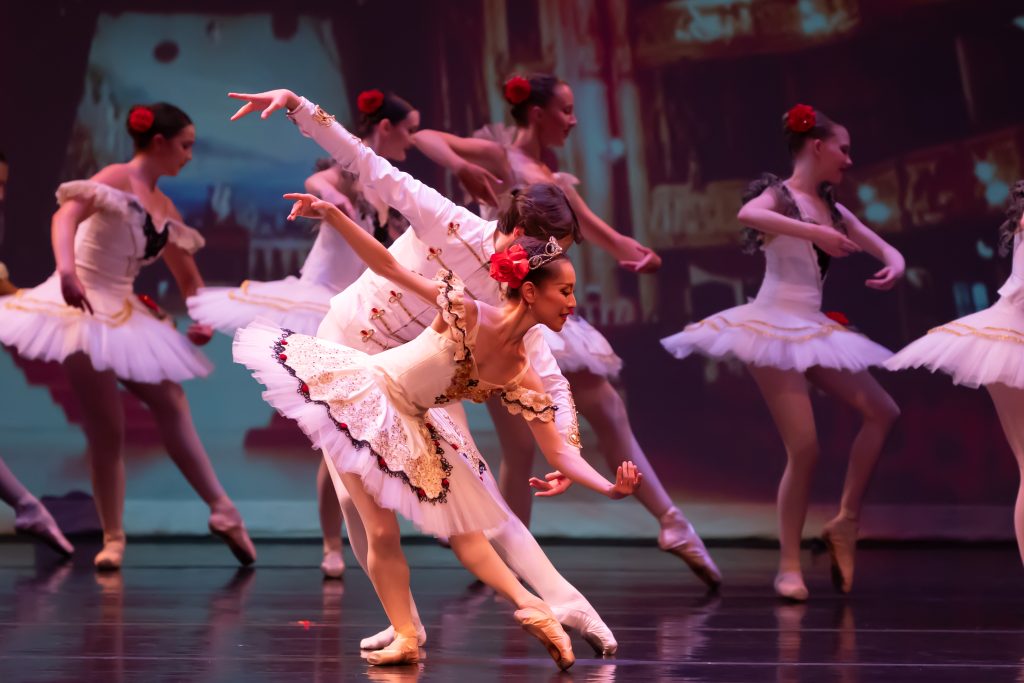
By the 15th season in 2024, FestivalSouth was no longer an emerging experiment. It was an established cultural force in the region, presenting more than 50 live events across music, theatre, dance and visual art.
The festival’s economic impact had become part of the public conversation, with more than $1.5 million in economic impact reported for the previous year. Community investment came from an increasingly broad coalition that included the City of Hattiesburg, Forrest County, the University of Southern Mississippi, Lamar County, businesses and individual donors.
The philosophy behind ticketing also reflected the institution’s larger mission. Nominal and free events helped remove financial barriers and encourage broader participation, reinforcing the idea that FestivalSouth was not simply a collection of ticketed performances for an existing arts audience.
It was a community invitation. And the invitations kept multiplying.


The Economics of Belief
There is an important lesson in the financial history of FestivalSouth that has little to do with accounting. The festival exists because people believe it should.
Ticket sales matter, but they have never told the entire story. Sponsorships, grants, donations, institutional partnerships, public support and volunteer labor all represent different forms of investment. Each says, in its own way, that the community believes the cultural return is worth more than the price of admission. That belief creates an unusual kind of economic engine.
The festival brings people into Hattiesburg, but it also gives them reasons to stay. It brings artists into the community, but it also gives local artists opportunities to work. It attracts audiences, but it also creates future audiences by introducing children and young people to the arts.
The economic impact can be measured in dollars.
The cultural impact is measured in generations.


Artie and the Argument for the Future
Among FestivalSouth’s most enduring ideas is Artie, the festival’s beloved family and children’s programming, which grew from a remarkably simple proposition: if the arts are going to shape a community, children should not have to wait until they are old enough to buy a ticket to become part of it. Artie creates opportunities for young audiences to encounter music, theatre, dance and the visual arts in ways that are playful, accessible and designed specifically for them.
Ivey Swan was a high school student when she imagined what a festival experience for children could be, long before she could have known how deeply the idea would take root. What began as the vision of a young person grew into Artie, a lasting part of FestivalSouth’s identity and a program that would introduce countless children to the arts. Today, Swan has children of her own, and there is a beautiful circularity in watching the vision she carried as a teenager now serve the next generation—including her own family.
That may be the most meaningful measure of a cultural institution’s success. A program created for children becomes part of their memories, those children grow up, and eventually they bring children of their own. The audience becomes the family; the participant becomes the parent. Artie is therefore more than a collection of family events. It is an investment in cultural inheritance, the quiet and powerful process by which a community teaches its children that imagination, creativity and the experience of making and witnessing art are part of a life worth having.
A child who encounters the arts today may become the audience member, artist, donor, teacher, volunteer or board member of tomorrow. That is how cultural institutions become sustainable—not simply by cultivating audiences, but by cultivating ownership. FestivalSouth’s commitment to children has always carried that larger promise: that the festival’s future is already sitting in the audience.


2026: Joining the National Stage
The 17th season brought FestivalSouth into the national spotlight. Forbes included FestivalSouth in its 2026 list of underrated music festivals, placing a Hattiesburg institution alongside festivals from across the country that deserved greater attention. The description itself was revealing: classical music, jazz, Broadway, blues, family programming, visual art, dance, film, lectures and community events, all concentrated into a multi-week festival.
The magazine was essentially describing what Hattiesburg had been building for years. The little festival had become difficult to overlook.
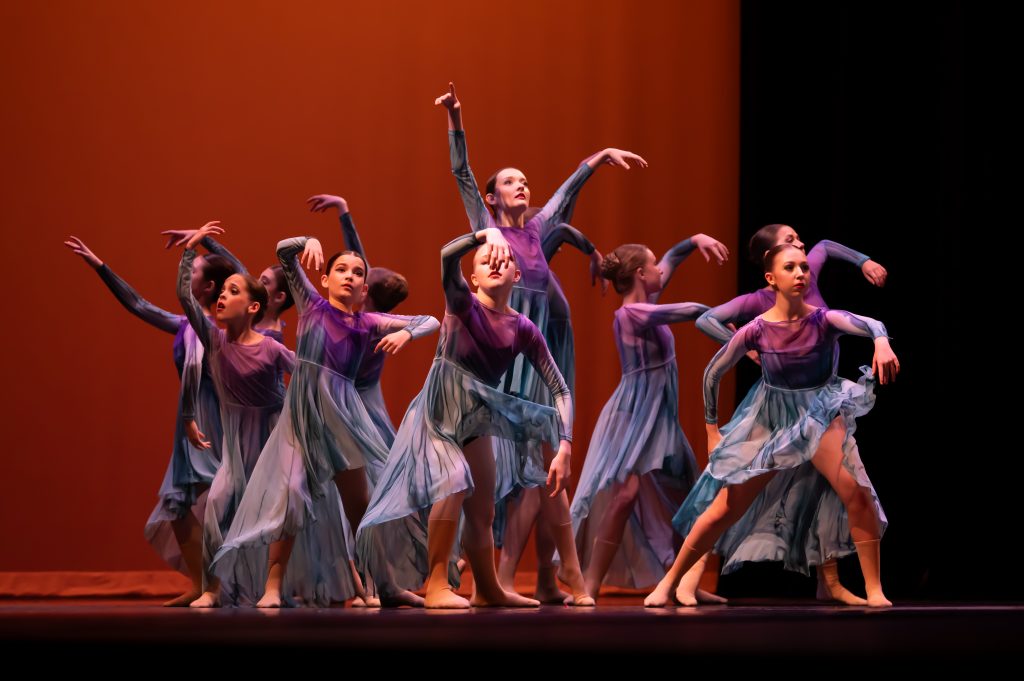
Then CNN came to town. As part of its national America 250 coverage for July 4, CNN filmed FestivalSouth’s Stars and Steps Forever, a dance program celebrating American music and culture. Suddenly, an artistic event that had been conceived and produced in Hattiesburg was being captured for a national audience as part of one of the country’s largest celebrations.
For years, FestivalSouth had been telling Hattiesburg that the arts happening here mattered. In 2026, national media began telling the country the same thing. The cameras arrived because there was something worth filming. The opportunity existed because artists had spent years developing work, audiences had spent years showing up, donors had spent years investing, community partners had spent years participating and an organization had spent years proving that ambitious programming could happen in Hattiesburg.
The national spotlight was not the beginning of the story. It was evidence of the story.


The People Behind the Improbable
No history of FestivalSouth can be reduced to a single person because no festival of this kind can be built by a single person.
Jay Dean’s artistic vision and his determination to place Southern Miss and Hattiesburg on a broader cultural map were foundational. Mike Lopinto’s extraordinary combination of artistic leadership, producing, marketing and community engagement became central to the festival’s development and to the larger arts ecosystem surrounding it.
But the story extends far beyond its most visible leaders. It includes university faculty and students, artists, technicians, administrators, board members, donors, sponsors, educators, volunteers, venue staff, community partners, local businesses and audiences who decided, season after season, that they would show up.


The Legacy is Not the Festival
Perhaps the most fitting way to understand FestivalSouth is to stop thinking of the festival as the final product. The festival is the mechanism. The real achievement is everything that has grown around it.
It is the young musician who discovers a future. The actor who finds a stage. The child who realizes that the arts belong to her, too. The visiting artist who discovers Hattiesburg. The donor who decides that culture is worth investing in. The business owner who understands that a thriving arts scene helps create a thriving city. The audience member who comes for one performance and returns for five. It is the city itself becoming more confident in its cultural voice.
For more than a decade and a half, FestivalSouth has convinced a community to believe that something remarkable can happen right in our own backyard.
And perhaps that is why the story of FestivalSouth reaches beyond Hattiesburg. It is a story about what can happen when ambition is matched by persistence, when institutions collaborate instead of competing, when artists are treated as essential rather than ornamental, and when a community decides that culture is not a luxury but part of its civic infrastructure.